
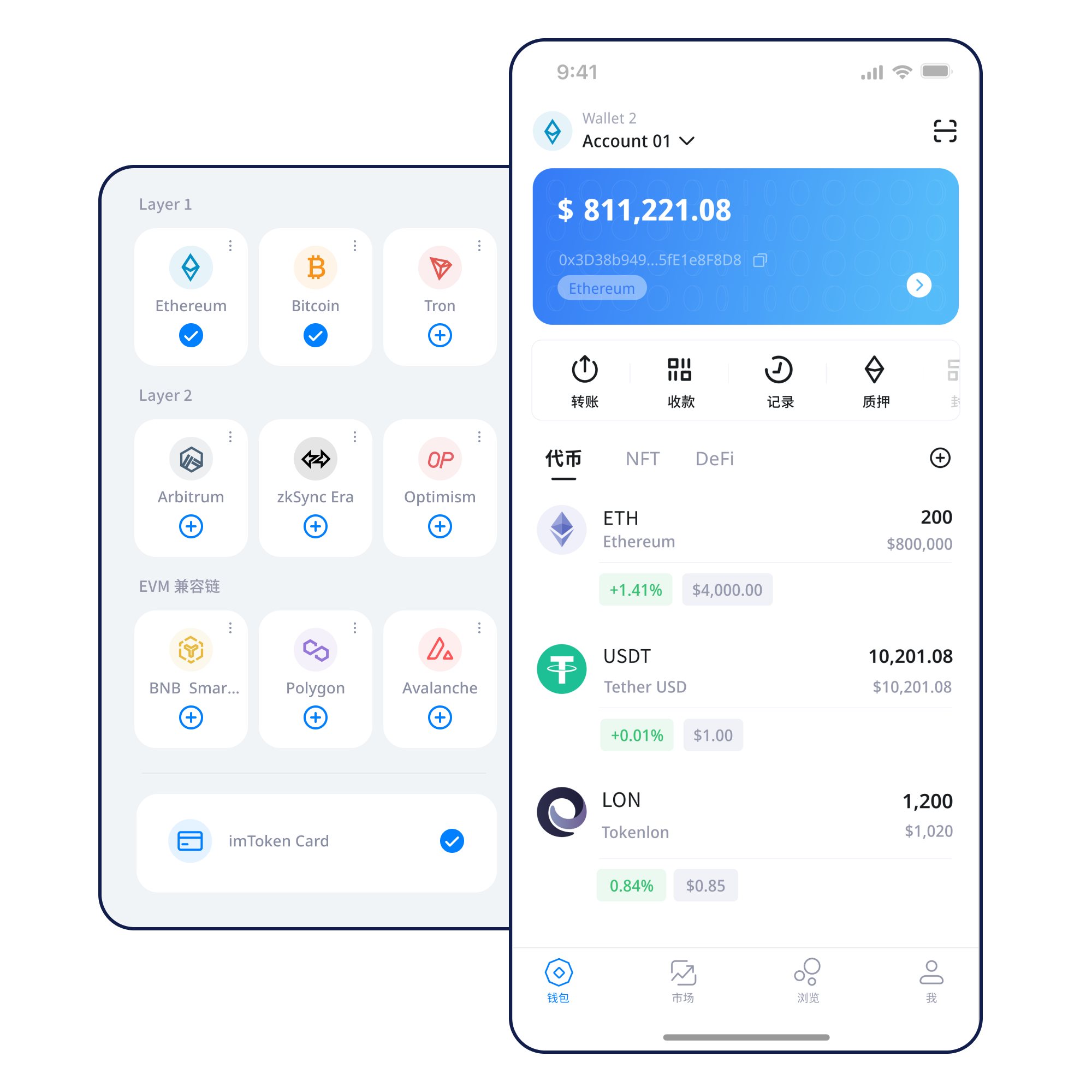
Capability boundaries and product role
imtoken App is easier to use when digital wallet and account are understood in the same operational context. A digital wallet manages blockchain accounts and signing requests. Its interface can display addresses, balances, and transactions, while the authoritative state remains on the relevant blockchain network. A wallet account is controlled by key material. The public address can be shared for receiving assets, but the secrets that control the account should remain private. These situations are rarely improved by clicking faster; separate the object, permission, and expected result instead.
In real use, imtoken App can organize information more clearly, but it does not change blockchain rules. The user still needs to confirm that digital wallet, account, and the intended action match. Third-party DApps, smart contracts, and networks can each introduce separate risk, so convenience in the interface does not replace permission or transaction review.
Practical checkpoint
- Identify whether the action is viewing, signing, or broadcasting, and do not treat an interface message as final on-chain state.
- Verify the network before sharing a receiving address, and stop if a page asks for key material.
- Before any transfer, signature, or approval, confirm that the network, address, and request details match the action you intended.
Real usage scenarios and what to verify
imtoken App is easier to use when network and sending assets are understood in the same operational context. Different blockchain networks have their own nodes, fees, confirmation rules, and contract environments. Identical asset names do not mean the assets live on the same chain. Sending assets creates a transaction that must be signed and broadcast to a network. An error in the address, network, amount, or fee can change the outcome. Understanding the boundary is more important than rushing to completion because on-chain actions can create difficult-to-reverse outcomes.
In real use, imtoken App can organize information more clearly, but it does not change blockchain rules. The user still needs to confirm that network, sending assets, and the intended action match. Third-party DApps, smart contracts, and networks can each introduce separate risk, so convenience in the interface does not replace permission or transaction review.
Practical checkpoint
- Confirm the network name before sending, adding an asset, or interacting with a DApp.
- Review the address, network, amount, asset, and fee one by one, and do not skip checks because of urgency or countdown pressure.
- Before any transfer, signature, or approval, confirm that the network, address, and request details match the action you intended.
A workflow from entry to result verification
imtoken App is easier to use when transaction history and device security are understood in the same operational context. Wallet transaction history is an organized view of on-chain activity and may be affected by indexing or synchronization delays. Final status should be checked with the transaction hash and block confirmations. Wallet safety depends on more than a password; system updates, malware, screen sharing, browser extensions, and local file protection all matter. Putting these concepts together is more useful than memorizing vocabulary without knowing when a check matters.
In real use, imtoken App can organize information more clearly, but it does not change blockchain rules. The user still needs to confirm that transaction history, device security, and the intended action match. Third-party DApps, smart contracts, and networks can each introduce separate risk, so convenience in the interface does not replace permission or transaction review.
Practical checkpoint
- Do not infer success or failure from a temporary balance change alone; inspect the corresponding on-chain record.
- Before important actions, disable unnecessary remote-control or sharing tools and keep the operating system and browser current.
- Before any transfer, signature, or approval, confirm that the network, address, and request details match the action you intended.
Security principles for ongoing use
imtoken App is easier to use when digital wallet and account are understood in the same operational context. A digital wallet manages blockchain accounts and signing requests. Its interface can display addresses, balances, and transactions, while the authoritative state remains on the relevant blockchain network. A wallet account is controlled by key material. The public address can be shared for receiving assets, but the secrets that control the account should remain private. In practice, the useful habit is to match what the interface shows against the network, address, and actual request details.
In real use, imtoken App can organize information more clearly, but it does not change blockchain rules. The user still needs to confirm that digital wallet, account, and the intended action match. Third-party DApps, smart contracts, and networks can each introduce separate risk, so convenience in the interface does not replace permission or transaction review.
Practical checkpoint
- Identify whether the action is viewing, signing, or broadcasting, and do not treat an interface message as final on-chain state.
- Verify the network before sharing a receiving address, and stop if a page asks for key material.
- Before any transfer, signature, or approval, confirm that the network, address, and request details match the action you intended.
Keep seed phrases and private keys under your own control. Do not send them to anyone. Review the address, network, amount, signature text, and approval scope before confirming. Third-party DApps and smart contracts can introduce independent risk.